
Beat the Heat: Why Hydration Matters in the UK (and How to Master It)
By Osteo & Therapy Hub — Chislehurst & Sidcup
During UK heatwaves, hydration becomes essential for preventing headaches, muscle cramps and fatigue. At Osteo & Therapy Hub in Chislehurst & Sidcup, we regularly see how dehydration affects muscle function, recovery and overall wellbeing. When the weather heats up — especially on those humid British days — your body has to work harder to stay cool.
This guide walks you through simple, practical ways to stay hydrated, spot dehydration early and look after yourself when temperatures rise.
Why Hydration Matters in UK Heatwaves
Humidity in the UK makes it harder for sweat to evaporate, meaning your body has to work twice as hard to regulate temperature. This speeds up dehydration — even if you don’t feel particularly hot.
According to the NHS, thirst is a late sign of dehydration, so it’s important to drink regularly throughout the day.
Dehydration Warning Signs to Watch For
Keep an eye out for:
Dark, strong‑smelling urine (aim for pale straw)
Tiredness, dizziness or mild confusion
Dry mouth or lips
Lingering headaches
Muscle cramps in the arms, legs or stomach
These symptoms are common in hot weather and often improve quickly with proper hydration.
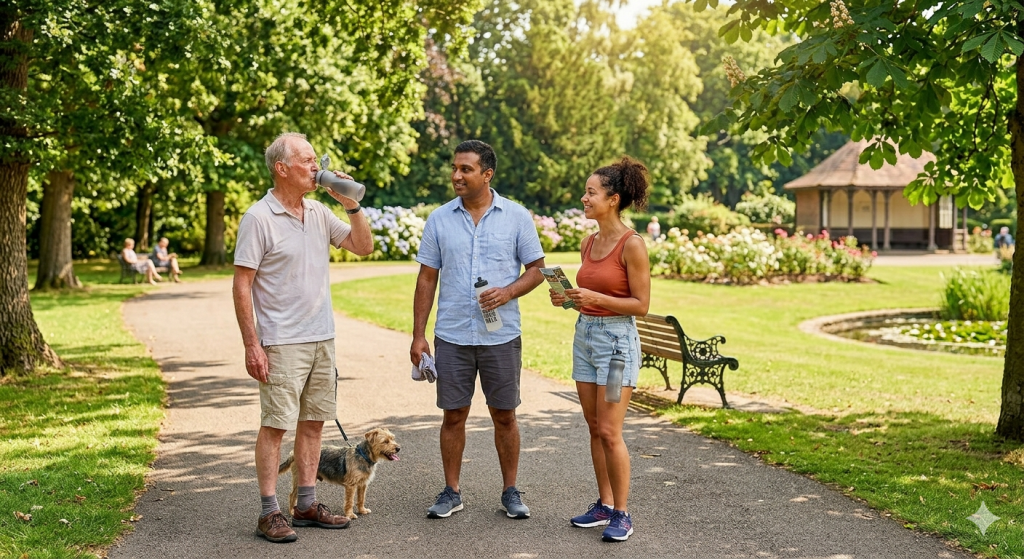
Smart Ways to Stay Hydrated in Hot Weather
1. The “Little and Often” Rule
Your body can only absorb water at a certain rate (roughly 200ml to 250 ml every 20 minutes). If you down a massive amount of water all at once, most of it will just pass straight through you without properly hydrating your cells. Keep a reusable bottle next to you and take a few sips every 15 minutes.
2. Eat Your Water
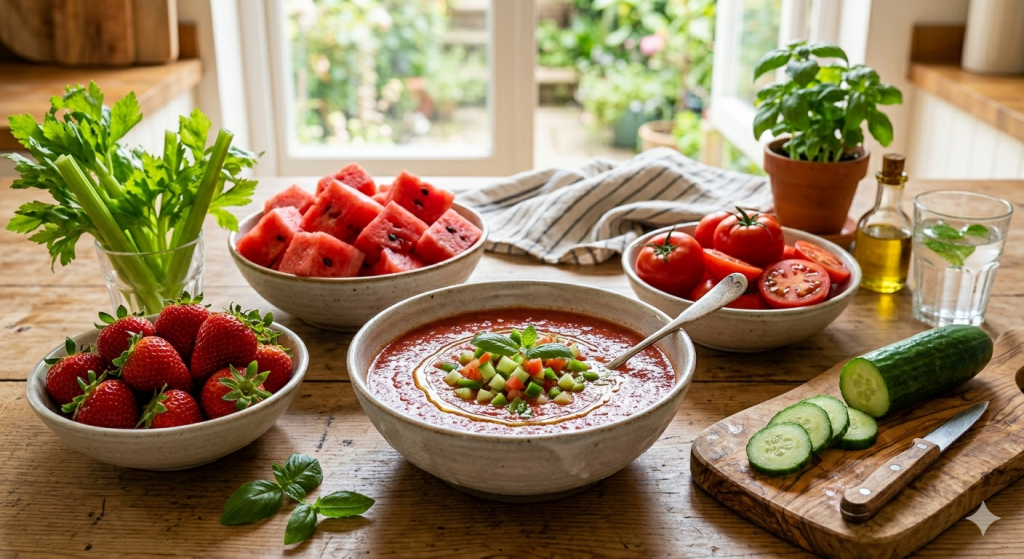
Did you know that about 20% of our daily water intake typically comes from food? Add these water rich items
- Watermelon and strawberries: Over 90% water.
- Cucumbers, celery, and tomatoes:
- Chilled soups like gazpacho
3. Dress Up Your Water
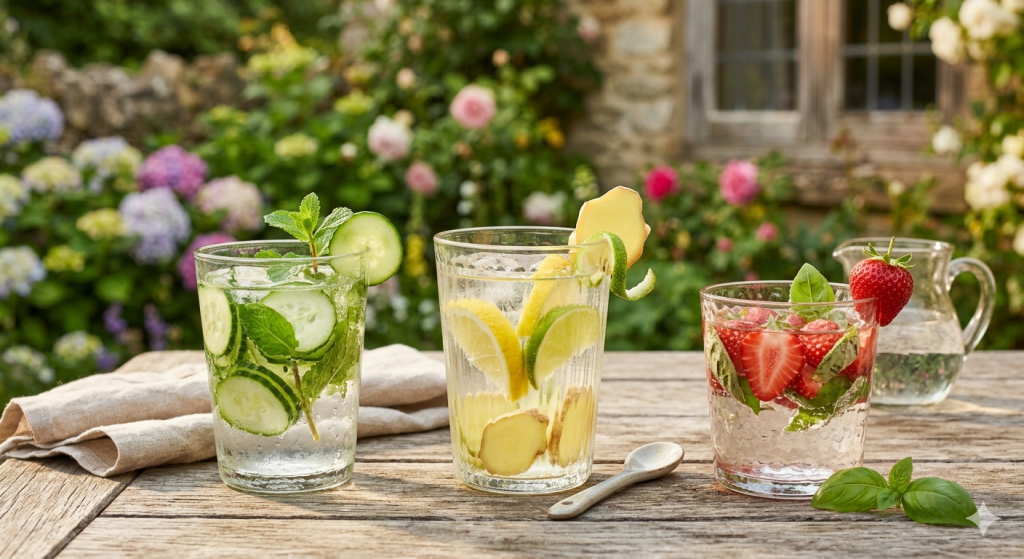
If you find plain water boring, flavour it naturally
- Cucumber and fresh mint
- Lemon, lime, and ginger
- Strawberries and basil
Refreshing, hydrating and perfect for British summer days.
4. Replace Your Electrolytes
When you sweat, you lose essential minerals like sodium, potassium, and magnesium. If you are drinking lots of pure water without replacing these salts, you can accidentally dilute your body’s chemistry, leading to cramping and fatigue.
- Add a dash of high-quality squash to your water.
- Mix a rehydration sachet or electrolyte tablet into one of your bottles.
- Coconut water (in moderation)
5. Front-Load Your Hydration
Mornings are generally cooler, making it much easier to comfortably drink a large glass or two of water. Start your day with 1-2 glasses of water, before coffee or breakfast.
Hydration Mistakes to Avoid
Alcohol and heavy caffeine act as diuretics meaning they make you lose water faster.
Use the 1:1 rule: for every alcoholic or caffeinated drink you have, match it with a full glass of water.
Hydration FAQs
Q: How much water should I drink during a UK heatwave?
6-8 glasses (1.5-2 litre) of fluid a day. Fluid includes water, tea, coffee, milk, squash, juices, and even hydrating foods like fruit and vegetables — not just plain water.
Q: What colour should my urine be if I’m hydrated?
Think pale straw. Dark yellow means you need to top up.
Q: Are electrolyte drinks necessary in hot weather?
Not normally, however they may help if you’re sweating a lot, exercising, or working outdoors. Otherwise, water is enough.
Q: Does coffee dehydrate you?
No — this is a common myth. Coffee and tea still count towards your daily fluid intake. Caffeine has a mild diuretic effect, but not enough to cause dehydration in normal amounts
Q: What are the early signs of dehydration according to the NHS?
Thirst, darker urine, tiredness, dizziness, dry mouth, headaches, or cramps.
How to Avoid Dehydration
Sip water regularly
Eat hydrating foods
Balance alcohol/caffeine with water
Keep an eye on vulnerable people (children, older adults, outdoor workers)
The Bottom Line
Staying safe during an English heatwave isn’t just about shade and fans — it’s about actively managing your hydration. By drinking steadily, eating water‑rich foods and recognising early signs of dehydration, you can enjoy the sunshine without the side effects.
If you’d like personalised guidance, our Nutritional Therapist Louise can help you optimise hydration and nutrition. For aches, pains or heat‑related muscle tension, Jackie — your local osteopath in Chislehurst & Sidcup — is here to help.