
How Stress Shows Up in the Body & How to Release It – Osteopath Sidcup & Chislehurst
Focus Areas: TMJ Pain & Jaw Clenching | Stress Relief | Osteopathy | Sports Massage | Nutrition
Location: Serving Chislehurst, Sidcup, and surrounding Kent / South East London areas.
Recently, I have seen several patients come into our clinic with severe jaw pain. Most of them are clenching and grinding their teeth in their sleep. However, this is rarely just a physical jaw issue. In fact, almost all of these patients are carrying a massive amount of life stress. They are navigating parental ill health, work redundancies, or house moves. As a result, that emotional tension builds up inside the body.
When your mind is overwhelmed, your body keeps score. Consequently, stress stops being just a mental burden. Instead, it starts showing up physically as jaw clenching, tight shoulders, bloating, or shallow breathing.
To break this painful cycle, we must address three key areas: your jaw muscles, your breathing, and your gut.
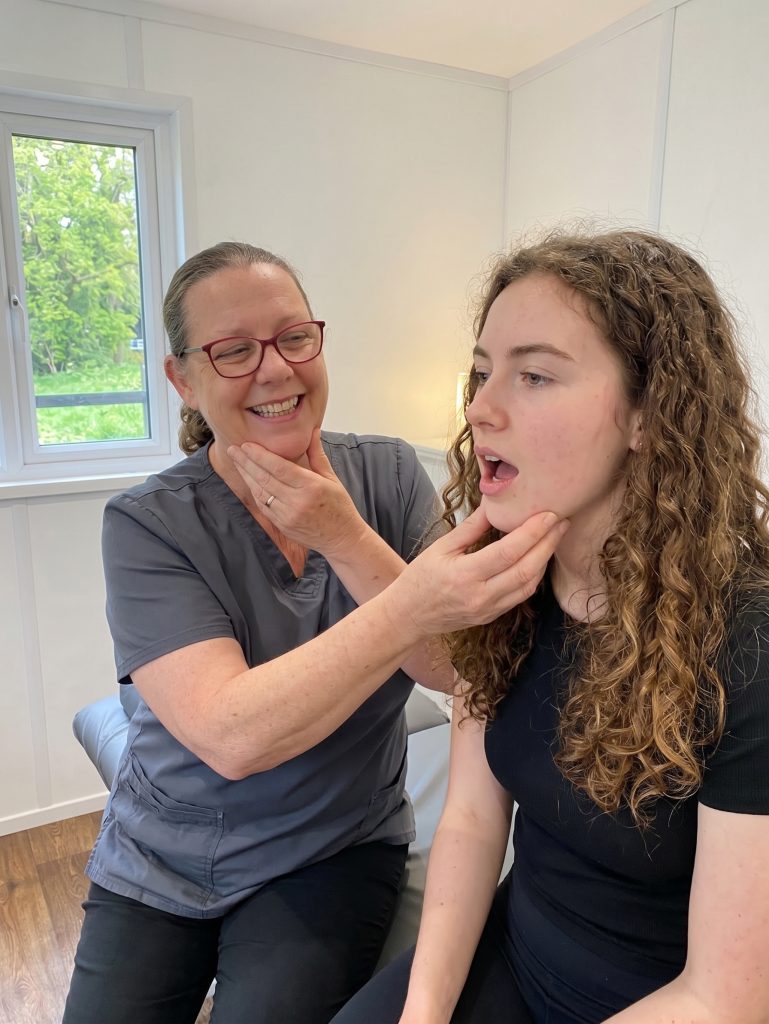
1. Jaw Clenching, TMJ Pain & Muscle Guarding
During heavy life events, your brain feels constantly threatened. Therefore, it locks your nervous system into a “fight or flight” response.
To protect you, your body uses muscle guarding. This is a automatic tightening of key muscle groups.
Nighttime Grinding: Subconscious stress causes intense teeth grinding during sleep. Consequently, this overworks your jaw muscles and leads to severe TMJ pain, clicky joints, and tension headaches.
Tight Shoulders: This tension quickly spreads into your neck and upper back. Because the muscles stay tight, local blood flow drops and persistent aches take hold.
2. Shallow Breathing & Locked Ribs
When life feels overwhelming, your breathing pattern changes. You stop taking deep belly breaths. Instead, you switch to fast, shallow chest breathing.
Overworking Neck Muscles: Shallow breathing forces the small muscles in your neck to lift your ribcage. As a result, this creates chronic neck and shoulder stiffness.
Keeping the Alarm On: Fast breathing signals to your brain that you are still in danger. However, deep belly breathing does the opposite. It stimulates the vagus nerve, telling your body it is safe to relax.
3. The Gut-Brain Axis & Inflammation
A direct nerve pathway connects your brain to your gut via the vagus nerve.
Slowing Down Digestion: In “fight or flight” mode, your body pulls blood away from digestion towards your arms and legs. Because of this, you may experience sluggish digestion, uncomfortable bloating, or stomach cramps.
Elevated Cortisol: Long-term life stress keeps your stress hormones high. Over time, high cortisol irritates the gut lining and increases bodily inflammation. This makes your joint and muscle pain feel twice as severe.
Integrated Clinical Treatment: How We Unwind Stress
Releasing deep physical stress requires a practical approach. We combine hands-on treatment with simple dietary support.
| Focus Area | Clinical Approach |
| Osteopathy & Sports Massage | Direct soft-tissue work releases tight jaw, neck, and back muscles. Mobilising the ribcage frees up your diaphragm so you can breathe deeply again. We also prescribe specific home jaw and neck exercises to restore joint movement and stop clenching. |
| Tailored Nutrition | Stress rapidly depletes magnesium in your body. This mineral is vital because it helps muscles relax and calms the nervous system. Adding magnesium-rich foods and staying hydrated calms gut irritation and lowers pain. |
3 Daily Actions to Reduce Physical Stress
Unclamp Your Jaw: Drop your tongue to the floor of your mouth. Let your teeth part slightly, and drop your shoulders down away from your ears.
Practice 4-7-8 Breathing: Inhale through your nose for 4 seconds. Hold for 7 seconds, and exhale through your mouth for 8 seconds. Repeat 4 times before bed to quieten jaw clenching.
Replenish Magnesium: Eat a handful of pumpkin seeds, leafy greens, or dark chocolate daily to help your muscle fibres relax.
Book an Osteopathy Consultation in Sidcup & Chislehurst
If life stress is showing up as jaw pain, neck stiffness, or digestive trouble, you do not have to tough it out alone. Combining osteopathy and sports massage with tailored nutrition helps reset your nervous system.
Contact our clinic today to book a consultation and receive a personalised treatment plan.
Frequently Asked Questions (FAQ)
Q: Can an osteopath help with TMJ and jaw clenching?
A: Yes. Osteopathic treatment uses gentle soft-tissue techniques to release tight jaw muscles. We also mobilise the neck and jaw joint to reduce clenching pain.
Q: How does exercise prescription help with jaw pain?
A: Targeted home exercises help retrain your jaw joints. Consequently, these movements restore healthy tracking and reduce nighttime muscle tension.
Q: Where is your clinic located?
A: Our clinic is based at Frogpool Manor Farm, Perry Street, Chilsehurst, BR7 6HA – just the other side of Sidcup’s Queen Mary’s Hospital roundabout.