family laughing

Laughter is the best medicine

Laugh more for your health

“Laughter is a bodily exercise, precious to health.” – Aristotle

We all need to laugh more for our mental and physical health.  The constant flow of negative news stories,  social media posts and miserable weather affects everyone’s mood. We all know that if our mood is low we can feel lethargic and aches and pains become more apparent. Once you start to feel pain then it in turn can affect your mental health and a vicious circle can start.

The physiological benefits of laughter

When you laugh there are several healthy physiological changes.

  • Your tolerance to pain increases.
    • Laughter increases your tolerance to pain by increasing the pain threshold.
  • When you laugh you stretch and relax your muscles
    • have you ever had the belly ache associated with roaring with laughter for several minutes? That occurs when you have given your diaphragm and abdominal muscles a really good work out – similar to doing a gym class.
  • Your blood circulation improves.
    • Laughter helps increase the oxygen in your blood and stimulates circulation reducing blood pressure.
  • You increase your oxygen intake.
    • As you laugh you will draw in a larger volume of oxygen, which can help increase your lung capacity.

The psychological benefits of laughter

Laughter also improves your mental health as it

  • Laughter releases endorphins and serotonin, neurotransmitters used in the mood control centre of your brain, which improve your sense of well-being and energy levels.
  • It reduces the stress hormone cortisol, reducing (and reversing) your stress response.
  • It improves memory and creative thinking processes.
  • Laughter is contagious and encouraging others to laugh will help prolong your laughter.

How to build laughter into your life.

For most of us a good belly laugh occurs in the presence of others – laughing at stories or jokes, a funny mishap, or the kids’ silly antics.

With younger children it is easy to get drawn in to their joy. Just watch them play, they have the most infectious giggles, tickle, chase, and dance with them. Get school age children to tell you silly jokes – they will often get them wrong cue more laughter. It won’t be long before you are all giggling helplessly and your stomachs will begin to ache.

If you have older kids it may be harder (especially if you need to separate them from their tech).  Set them a challenge, get them to think up things make you laugh. Join in with their interests that make them happy or watch films or online video clips that they think are funny. Are they up for playing to unexpected pranks (nothing dangerous or damaging!)? Try some of the current dance challenges with them. Anything to get them out of their rooms and laughing.

With friends and family, ensure you are in a relaxed welcoming space and enjoy time together. Cook and share a meal together, rehash funny memories or stories, or play some silly games such as Speak Out, charades or Pictionary.

How can osteopathy help?

The more you laugh the easier it will become, and if you find yourself with sore stomach muscles, your osteopath will be able to show you how to stretch them out. Make sure you tell your osteopath you need to laugh more, they may have a great source of silly stories or jokes to keep you entertained during your appointment, and they will want you to relax and will be happy to encourage you to laugh.

If you are looking for a more inventive way you could try laughter yoga.

If you need some help with those aches and pain so you can laugh more then please contact us to see how we can help. 

Spikey massage balls

Spikey Massage Balls – Instruments of Torture

Spikey Massage Balls – Tools for Healing 

When I show my patients the spikey massage balls, they ask if they are tumble drier balls or dog toys. They often look apprehensive and are initially reluctant to try them. However, it doesn’t take long to convert them to fans of these portable massage tools.

Read More

Osteo Therapy Hub clinic guide to avoiding lower back pain while gardening in Chislehurst and Sidcup.

How Can I Prevent Back Pain from Gardening? | Osteo & Therapy Hub

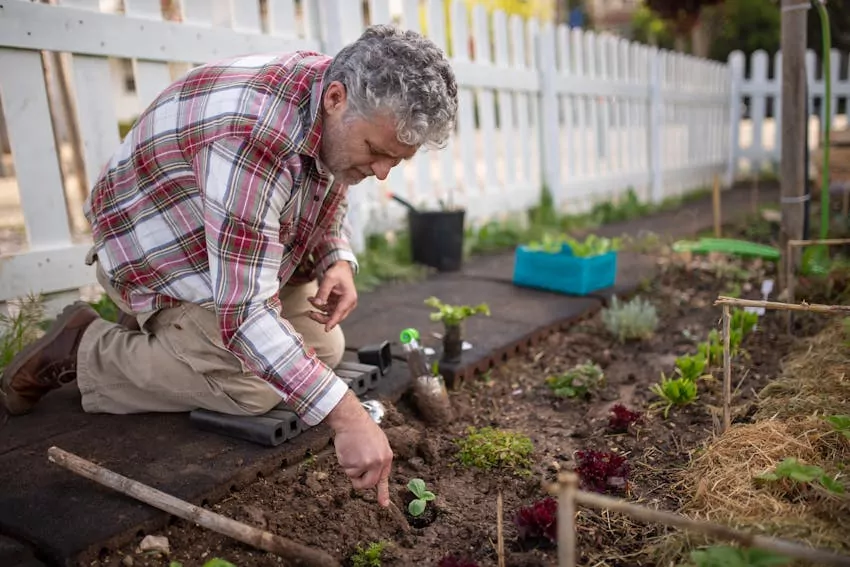
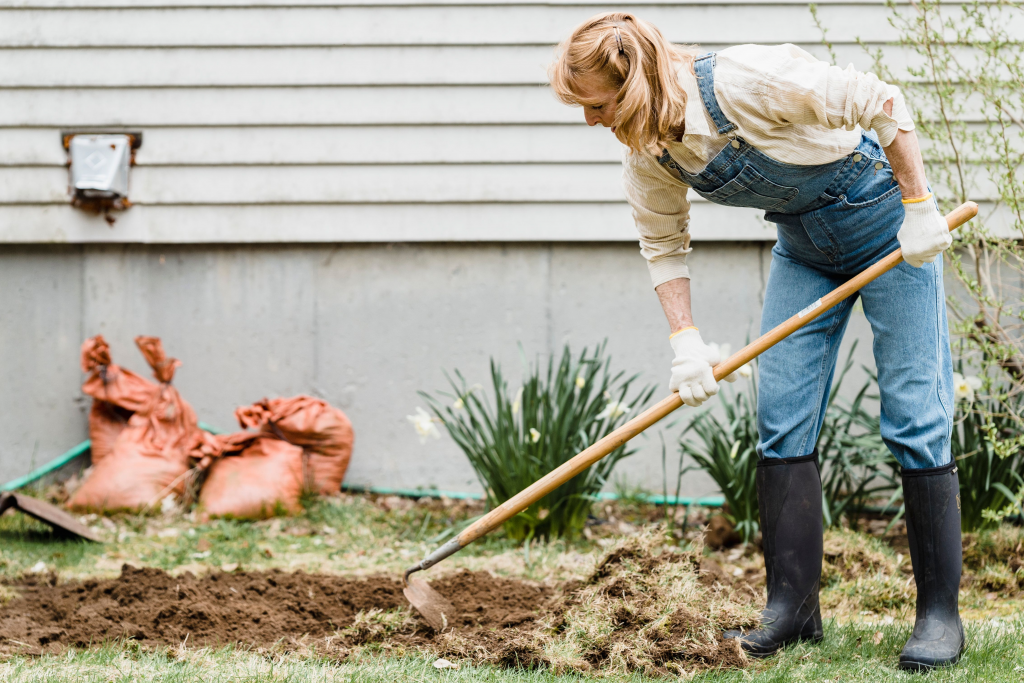
If you’ve recently spent a long bank holiday weekend preparing your soil, digging, weeding, or clearing up winter debris, you are not alone if your body is feeling the strain. At the Osteo & Therapy Hub at Frogpool Manor Farm, we frequently welcome Chislehurst and Sidcup residents who need help resolving acute aches, stiffness, and lower back pain after a hard weekend in the garden.

Statistics show that over 80% of the population will experience back pain at some point. Furthermore, a Gallup poll revealed that 47% of people experiencing back pain attributed it directly to gardening—a figure that rises to 56% for those over the age of 35.

Much like an athlete starting a new playing season, your body can be out of conditioning after a sedentary winter. When you suddenly introduce hours of heavy lifting and bending on wet, heavy spring ground, the musculoskeletal system reacts. However, with the right osteopathic preparation, gardening shouldn’t cause you pain.

Infographic showing calories burned during spring gardening tasks like weeding and mowing.

What Are the Health Benefits of Gardening?

Whether gardening is your ultimate passion or a chore you put off (like me!), the sense of well-being you feel afterward is deeply rooted in science. Stepping outside triggers physical and mental health benefits that actively support your body’s recovery systems.

1. How many calories does gardening burn?

According to a Harvard Medical School study, one hour of yard work provides a highly effective full-body workout:

  • Clearing winter debris: ~400 kcal/hour

  • Planting flowers: ~200–400 kcal/hour

  • Weeding: ~200–400 kcal/hour

  • Mowing the lawn: ~250–350 kcal/hour

2. The Physical & Musculoskeletal Benefits

  • Strengthens Underused Muscles: Gardening requires multi-directional movement, stretching joints and engaging deep stabilizing muscles that often remain dormant if you have a sedentary desk job. This sudden engagement is exactly why you might feel delayed onset muscle soreness (DOMS) for a couple of days afterward.

  • Cardiovascular & Blood Pressure Support: The sustained physical effort gives your heart a healthy workout, helping to naturally lower blood pressure.

  • Immune System Boost: Direct exposure to soil bacteria trains your immune system to develop more effective responses. Additionally, outdoor sunlight provides vital Vitamin D, which regulates immune function and aids calcium absorption for stronger bones.

3. Mental Health & Nervous System Regulation

A study published in Why Garden? – Attitudes and Perceived Health Benefits (May 2021) found that gardening just 2 to 3 times a week yields the maximum benefit for personal well-being scores.

According to the World Health Organization (WHO) Urban Green Spaces and Health report, contact with nature triggers the parasympathetic nervous system. This shifts your body out of a “fight-or-flight” stress state, reducing anxiety, lowering cortisol (stress hormones), and improving sleep quality.

 7 Osteopath-Approved Tips to Prevent Gardening Injuries

To protect your spine from sustained flexion and shearing forces, implement these ergonomic and clinical adjustments into your gardening routine:

  1. Warm Up and Stretch Before You Start: Treat gardening like a sport. Perform gentle dynamic stretches for your hamstrings, lower back, and shoulders before grabbing your tools to increase blood flow to the tissues.
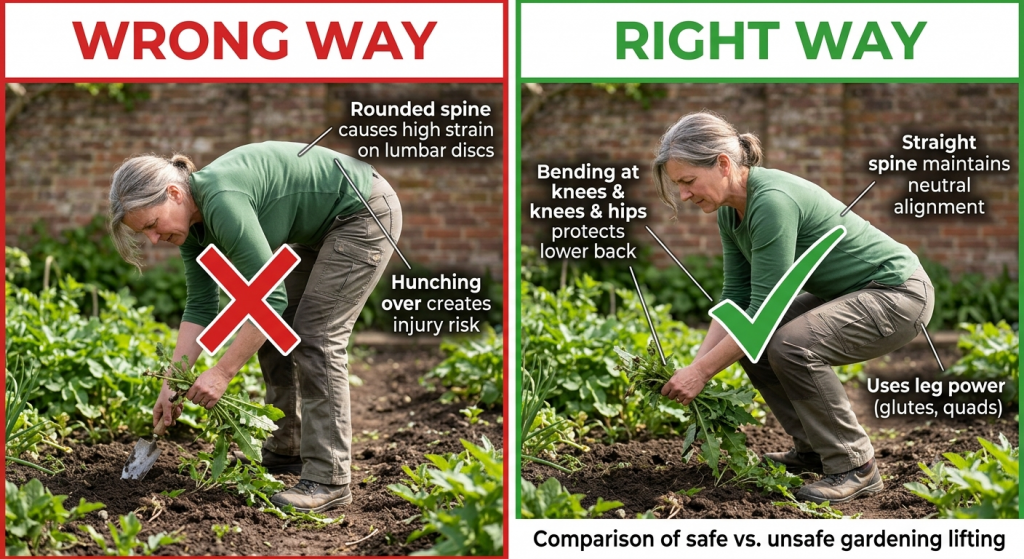
  2. Maintain Ergonomic Posture: Always bend at your knees and hips, keeping your spine neutral rather than rounding your lower back. When digging, consciously alternate your stance and the direction you twist to prevent repetitive strain on one side of your pelvis.
  3. Use the Right Tools for Your Height: Set up a potting bench at a comfortable height to avoid hunching over seedlings. Use long-handled tools to maximize leverage, and utilize a sturdy step stool for hard-to-reach hedges to avoid overextending your shoulders.
Correct ergonomic posture for gardening showing how to bend at the knees to prevent lower back strain.
  1. Manage Your Time via the “30-Minute Rule”: Do not try to clear the whole garden in one afternoon. Break your work into manageable chunks—such as limiting yourself to one wheelie bin of waste per session—and change your physical position or take a break every 30 minutes.
  2. Stay Hydrated: Dehydration reduces the fluid content in your spinal discs, making them more susceptible to injury. Drink water every time you take a break (roughly every half hour), treating it with the same hydration discipline you would use at the gym.
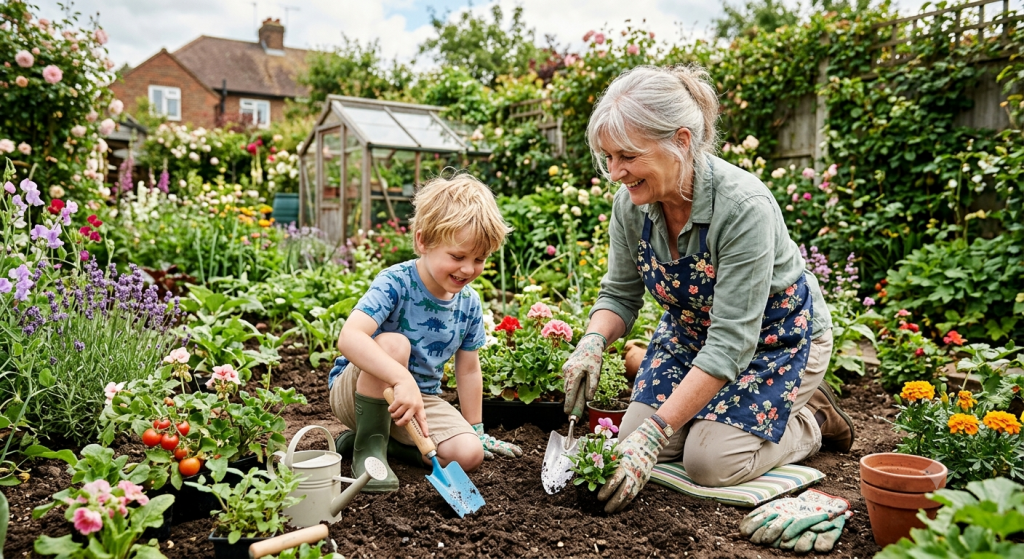
  3. Delegate Tasks to Small Helpers: Children love being outside. Give them their own patch of soil or let them handle the weeds in hard-to-reach places. It keeps them engaged and saves your lower back from awkward bending.
  4. Practice Sun and Skin Safety: Wear a hat and apply high-factor sunscreen between 11 AM and 3 PM. Wear loose, protective clothing to safeguard your limbs if you are clearing thick brambles or stinging nettles.
Family using ergonomic gardening tools and kneeling pads to protect joints from stiffness.

How Can Osteopathy Help with Gardening Back Pain?

If you are feeling stiff, locked up, or achy despite trying regular stretching, it means your musculoskeletal system may have suffered minor micro-tears or joint restrictions from overexertion.

At Osteo & Therapy Hub, we use targeted manual therapy, joint mobilisation, and soft tissue massage to relieve muscle tension, restore pelvic alignment, and improve spinal mobility. If your back pain doesn’t settle within 48 hours of rest, let us provide you with personalised clinical advice to get you moving freely again.

Book an Appointment Online Today to loosen up your joints, resolve your discomfort, and safely bring your garden back to life this summer.